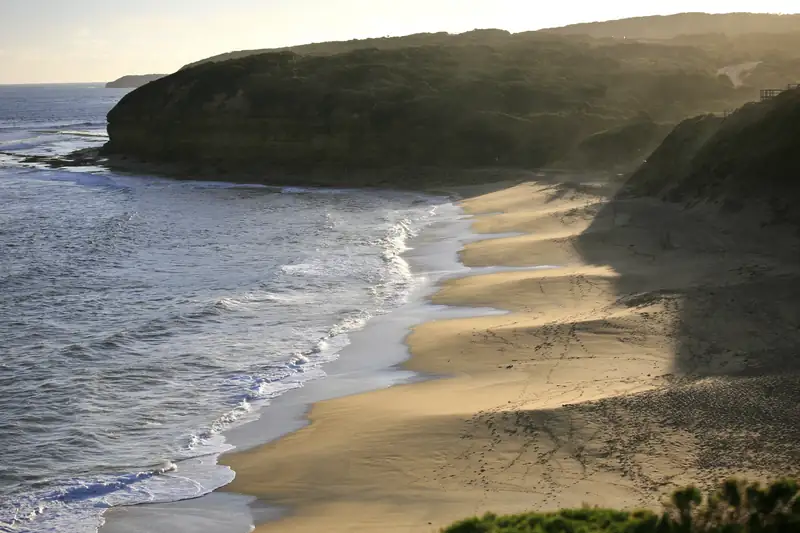
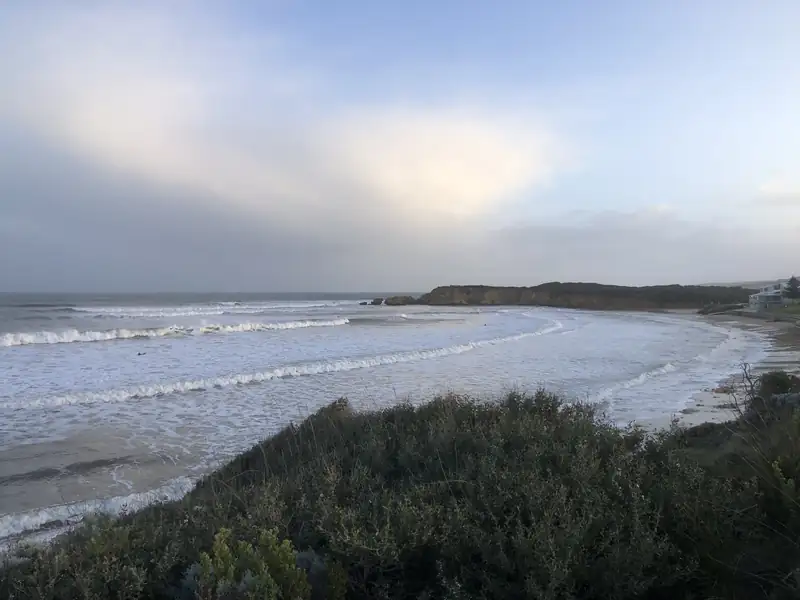
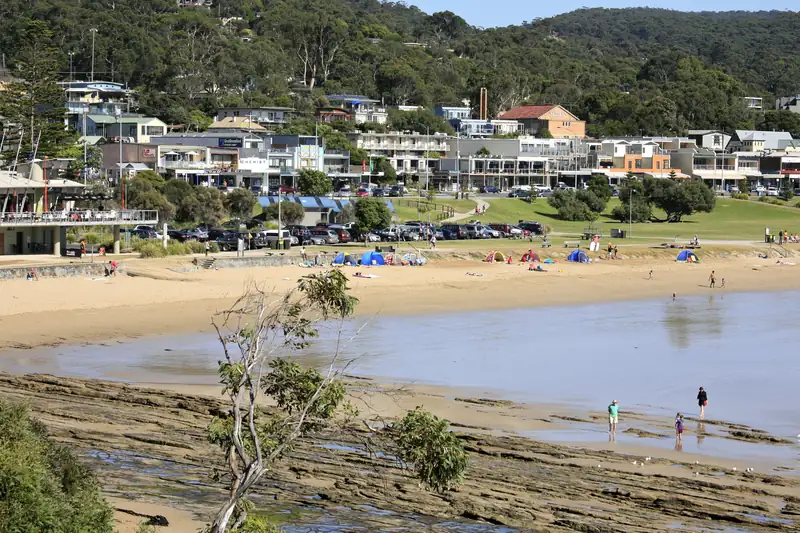
Bells Beach is the surf break 8 km west of Torquay and about 29 km from Geelong, home of the Rip Curl Pro at Easter, a contest first held there in 1962. Entry is free: park in the reserve, watch from the clifftop viewing platforms, take the timber steps to the sand or walk in on the Surf Coast Walk.
Bells Beach is a surf break in a clifftop reserve about 8 km west of Torquay and about 29 km from Geelong. Its two land managers, past and present, call it the world’s first surfing reserve, and the contest that became the Rip Curl Pro has run every year since 1962 apart from 2020 and 2021. Visiting is free. Drive into the reserve, watch from the viewing platforms above the break, then take the timber steps down to the beach or walk a stretch of the Surf Coast Walk.
You do not need to surf to enjoy it. Plan on 30 minutes for a look, or half a day if you walk in from Torquay.
Visiting Bells Beach
| Detail |
Checked October 2026 |
| Entry |
Free |
| Getting there |
About 35 minutes’ drive from Geelong; 11 minutes from Torquay |
| Parking |
Sealed car park inside the reserve, on Bells Beach Road |
| Public transport |
None to the beach; bus 53 reaches Torquay, then walk |
| Dogs |
Allowed in the reserve on a lead |
| Manager |
Great Ocean Road Coast and Parks Authority (since 1 July 2024) |
The car park itself has views along the coast and over the break. The white wave sign at the first car park went up in 1972 and is now on the Victorian Heritage Register.
Neither land manager lists a lifesaving patrol for Bells. Treat it as a place to watch surfing, and swim at the patrolled beaches back in Torquay.
The Great Ocean Road Coast and Parks Authority maintains the viewing platforms along the clifftop. From them you can see the two main breaks, Bells itself and Winki Pop.
The timber steps from the car park to the beach were built in 2008 and give year-round access down to the sand.
The Surf Coast Shire once proposed a 60 m elevated walkway and viewing platform over Winkipop. Surfers objected, and in May 2021 the state government approved the reserve’s new plan only on condition that the platform was dropped. So what you see is low-key on purpose: a car park, the steps, the platforms and the bush.
The Rip Curl Pro
The Rip Curl Pro is Bells Beach’s surf contest. It is held over Easter and is the event most people know the beach from.
Dates and facts (Checked October 2026):
|
|
| 2026 event |
1 to 11 April 2026, the first stop of the WSL Championship Tour |
| 2027 event |
Dates not announced by the WSL or Surfing Victoria |
| Contract |
The Victorian Government has the event locked in to 2028 |
| First contest |
Australia Day 1962 |
| First prize money |
1973, from Rip Curl |
Surf Coast Shire calls it “the world’s longest running surf contest”, and the Victorian Government uses similar words. It has run every year except 2020 and 2021, when COVID-19 stopped it.
The winner rings a bell, which is the trophy. The Australian National Surfing Museum in Torquay has an exhibition on those bells, with more than a dozen on display; see it before or after your visit.
During the contest, spectators watch for free from the clifftop. Check the WSL website for the day’s schedule before you drive down.
Walking the Surf Coast Walk to Bells
The Surf Coast Walk passes through the reserve, with views over both Bells and Winki Pop. It runs from Torquay to Fairhaven, just past Aireys Inlet.
- From Torquay: trail guides put Point Danger to Bells Beach at about 6.5 km, along the clifftops past Jan Juc. Count on about two hours one way at an easy pace.
- Past Bells: the next section to Point Addis is about 8.2 km by the same guides.
- Total length: in July 2026 the Great Ocean Road Coast and Parks Authority announced it was moving the trailhead from Point Impossible to Whites Beach East in Torquay, which cuts the official length by about 3 km to around 41 km. Older guides say 44 km.
There is no bus at Bells. Either walk both ways, leave a car at each end, or catch a lift back to Torquay.
History of Bells Beach
Bells Beach is on Wadawurrung Country. Its Wadawurrung name, Djarrak, means “bended arm”, after the shape of the cliffs, according to Surf Coast Shire and the Great Ocean Road Coast and Parks Authority.
The surfing story is short and well recorded:
| Year |
What happened |
| 1961 |
Local surfers grade a track down to the beach |
| 1962 |
The first contest, a “Surfboard Rally”, is held on Australia Day |
| 1970 |
Bells Beach Road is built in time for the World Surfboarding Titles |
| 1971 |
The council becomes land manager; in November the land is named the Bells Beach Surfing Recreation Reserve |
| 1973 |
Rip Curl puts up prize money and the contest becomes the Rip Curl Pro |
| 1981 |
Simon Anderson wins on a three-fin “thruster” board |
| 2008 |
The current timber steps are built |
| 2024 |
Management passes from Surf Coast Shire to the Great Ocean Road Coast and Parks Authority |
Both the shire and the authority call the 1971 naming “the world’s first surfing reserve”. The Victorian Heritage Database gives 1973 for the reserve instead. Surf Coast Shire also calls the 1973 contest the first professional surfing contest.
The reserve is not only about surf. The shire’s surveys count 197 native plant species and more than 80 bird species, including the Rufous Bristlebird, listed as vulnerable. The sea off Winki Pop and westward has been part of Point Addis Marine National Park since 2002.
Surfing Bells
Bells is where the world tour professionals compete. If you are learning, take a lesson on Torquay’s main beach first; our Torquay guide lists one with board and wetsuit supplied. A tandem skydive from up to 15,000 ft also flies over Torquay and Bells if you would rather see it from above.
Bells Beach on a Great Ocean Road trip
Bells is the first stop on the Great Ocean Road after Torquay, so it fits any drive west. Our Great Ocean Road itinerary puts it on the way to Anglesea and Lorne, and the Great Ocean Road map gives the distances.
The most-reviewed big day tour from Melbourne stops at Torquay’s surf beach with a look at Bells. Like the others, it starts in Melbourne and does not stop in Geelong. See Great Ocean Road tours to compare them, or all tours for local options. If you want to stay near the coast but close to the city, our Geelong accommodation guide covers both.