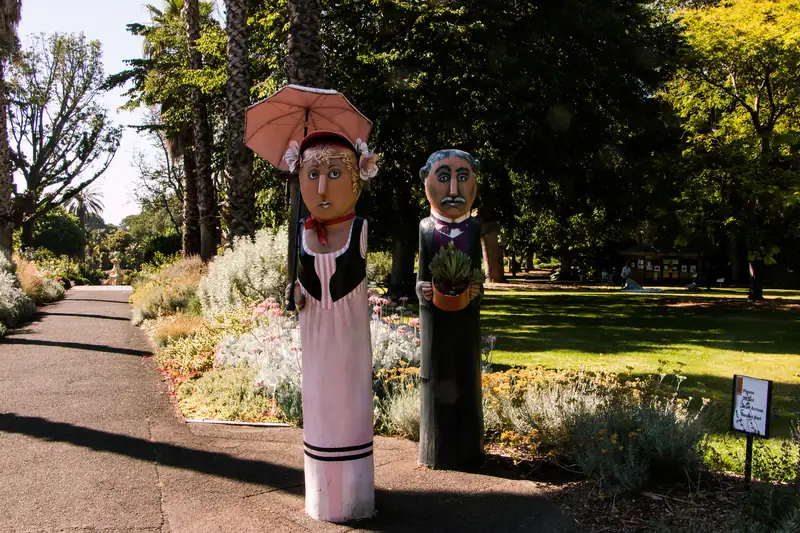
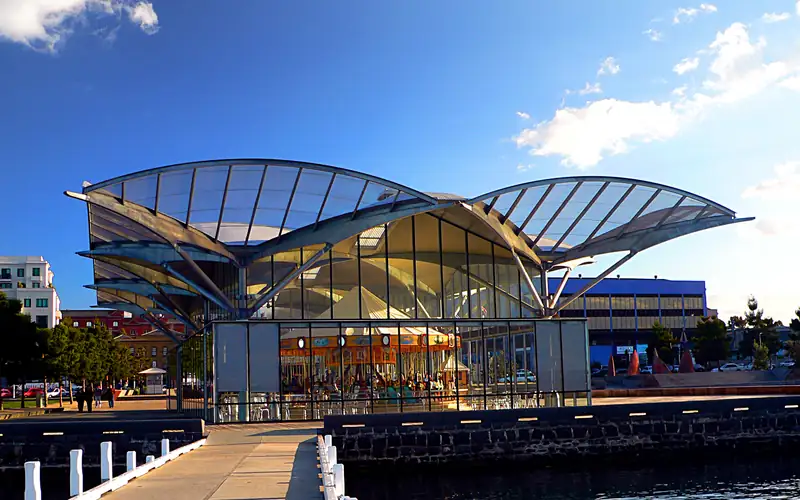
The Geelong Botanic Gardens are free and open every day, 8 am to 7 pm in daylight saving and 8 am to 5 pm otherwise. They sit in Eastern Park, about 600 m uphill from Eastern Beach. Highlights are the 1860s Sunken Glasshouse, the Conservatory where a corpse flower bloomed in 2024, and the 2002 dry-climate garden.
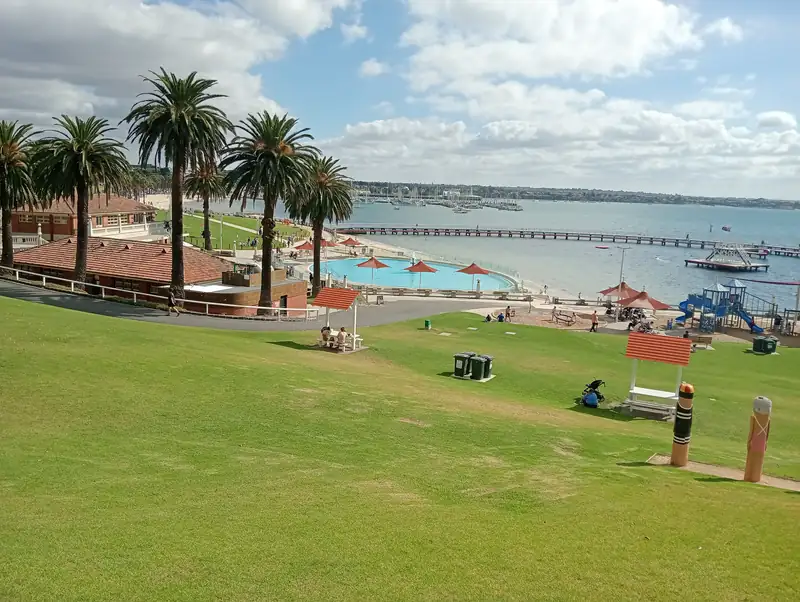
The Geelong Botanic Gardens are free to visit and open every day: 8 am to 7 pm during daylight saving and 8 am to 5 pm the rest of the year. They are inside Eastern Park, the big green hill east of the city centre, with the main entrance at the corner of Eastern Park Circuit and Podbury Drive. From the Eastern Beach swimming enclosure it is about a 600 m walk up the hill. Plan on an hour to wander through, longer with lunch at the café.
Hours, entry and café
|
Detail |
| Entry |
Free |
| Gardens hours (daylight saving) |
8 am to 7 pm, every day |
| Gardens hours (rest of the year) |
8 am to 5 pm, every day |
| Café spring hours |
Mon to Wed 9:30 am to 4 pm; Thu to Sat 8:30 am to 6:30 pm; Sun 9:30 am to 6:30 pm |
| Café summer hours |
Mon 9:30 am to 4 pm; Tue to Sat 8:30 am to 6:30 pm; Sun 9:30 am to 6:30 pm |
| Entrance |
Corner of Eastern Park Circuit and Podbury Drive, East Geelong |
Checked October 2026 on the City of Greater Geelong’s gardens and café pages.
The café is WYM (Where You Meet), a locally owned business that took over the gardens café in December 2023. You may still see the old name, the Tea House, on older maps and listings, along with a notice that it was closed; that notice is out of date. The council says menus and service vary through the day.
What to see
The Sunken Glasshouse
This is one of the oldest buildings in the gardens. It was built in the 1860s and used by the first curator, Daniel Bunce, and the council calls it a rare example of the European-style conservatories early settlers built. The plant displays inside are changed regularly.
The Conservatory
The Conservatory is where Geelong’s first corpse flower (titan arum) bloomed in November 2024. The gardens had grown it from corms received in 2021 from the Botanic Gardens and State Herbarium of South Australia. The council says more than 20,000 people came to see it, and it kept the Conservatory open around the clock while it flowered. In normal times the council gave the Conservatory’s hours as 9 am to 4 pm; we have not confirmed those for 2026, so check before making a trip just for it.
The 21st Century Garden
Near the entrance is the newest part of the gardens, added in 2002. It is planted for a dry climate, with native and arid-zone species, and Queensland bottle trees stand at the entrance. That suits the city: the Bureau of Meteorology records about 525 mm of rain a year at Geelong, and the garden shows what grows here without much watering.
Roses, salvias and the trees
The council lists roses, salvias and the gardens’ trees among its main collections, and Wikipedia adds registered collections of pelargoniums and salvias. Some of the older trees are on the National Trust of Australia (Victoria) Register of Significant Trees. There are also regular plant sales.
A short history
The land in Eastern Park was set aside as a botanical reserve in 1851, according to the Victorian Heritage Database, which lists the park and gardens on the Victorian Heritage Register. Wikipedia gives 1850 as the start; most sources use 1851. A committee of management followed in 1852, and Daniel Bunce became the first curator in 1857. Bunce planned gardens across the whole reserve, with winding paths and a lake in the south-east corner; the lake was filled in in 1929.
Some of the Victorian-era buildings have gone. A large timber fernery opened in 1885 and was pulled down some time after the Second World War, and one of the original glasshouses and the curator’s house have also been lost. Wikipedia says the fenced gardens now cover about 17 acres inside the much larger park. You will see claims online that Geelong has the fourth-oldest botanic gardens in Australia; we could not confirm that ranking from a reliable source.
Eastern Park around the gardens
The fenced gardens are only part of Eastern Park, the larger parkland on the hill east of the city centre, and the Victorian Heritage Register lists the park and gardens together. Outside the garden fence the park is open grass and trees, which makes it a good spot for a picnic or a kick of the footy. The corpse flower brought the gardens unusual fame in 2024: as well as the visitors who came in person, the council says its livestream drew more than 350,000 views.
Guided walks and group tours
The gardens offer group tours and guided walks, and run school programs. Details and bookings are on the council’s Geelong Botanic Gardens website. There is also a volunteer program if you live locally.
Getting there
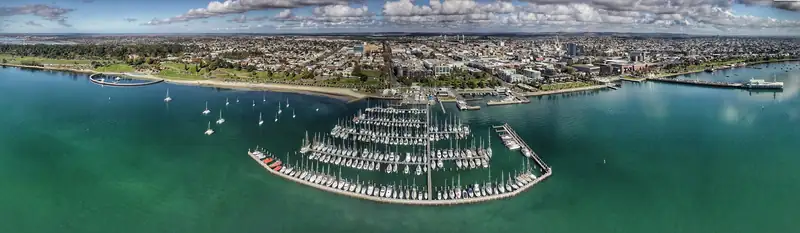
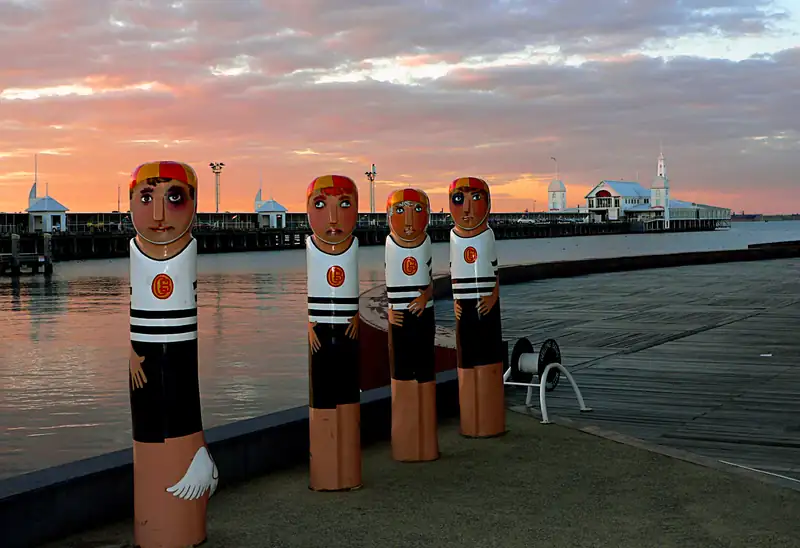
From the waterfront, walk east past Eastern Beach and up the hill into Eastern Park; it is about 600 m from the swimming enclosure and about 1.5 km from the Carousel. The painted bollard trail ends at Limeburners Point at the foot of the park, so the gardens make a good finish to the Geelong bollards walk. From Geelong railway station it is about 2 km, or a short drive.
The Geelong parking guide covers parking around Eastern Park and the waterfront.
Making a day of it
Pair the gardens with a swim at Eastern Beach in summer, or with the Geelong Waterfront and its Carousel at any time of year. For a family day, the Geelong with kids guide has more ideas nearby.