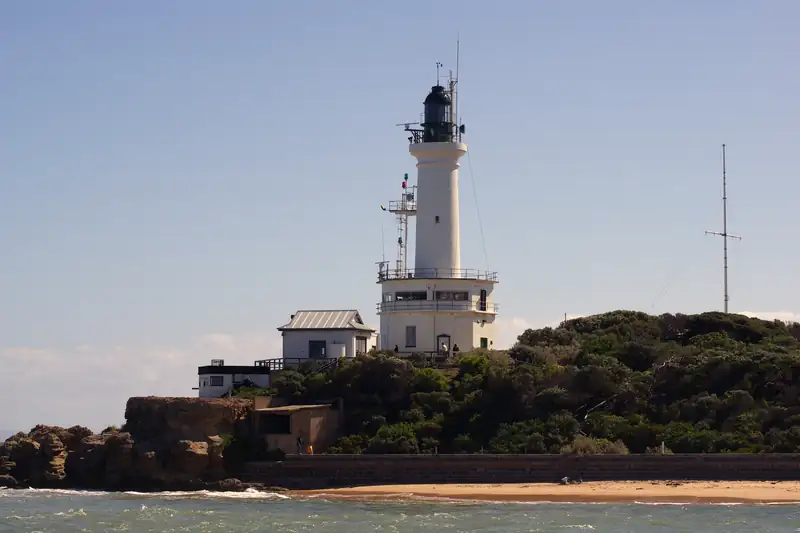
Point Lonsdale Lighthouse is a 21 m white concrete tower, first lit in 1902, on the headland overlooking the Rip at the entrance to Port Phillip. Volunteers from the Queenscliffe Maritime Museum run 30-minute tours to the top every Sunday from 9:30 am to 1 pm. Book ahead: each tour takes eight people.
Point Lonsdale Lighthouse is the white tower on the headland at the western side of the Rip, the entrance to Port Phillip. It was first lit on 20 March 1902 and stands 21.3 m tall. You can walk around it any day, and volunteers from the Queenscliffe Maritime Museum run 30-minute tours to the lantern every Sunday from 9:30 am to 1 pm. Each tour takes eight people and bookings are essential. The lighthouse is about 29 km, or 30 minutes by car, from Geelong.
Lighthouse tours
| Tour detail |
Checked October 2026 |
| Run by |
Queenscliffe Maritime Museum volunteers, by arrangement with Ports Victoria |
| Days |
Every Sunday |
| Times |
9:30 am to 1 pm, last entry 12:30 pm |
| Length |
About 30 minutes |
| Group size |
Up to 8 people |
| Payment |
Card only |
| Booking |
Essential, through the museum’s website |
| Children |
At least 5 years old and 90 cm tall |
| Not suitable for |
People with heart pacemakers (telecoms equipment in the tower), claustrophobia or vertigo |
The tour climbs to the lantern. From the top, the museum says, you look across the Heads and along the coast to Ocean Grove and Cape Schanck.
We don’t list a price because the only figures we found came from a 2024 listing. The museum shows the current fare when you book. Lighthouse tour vouchers are also sold on its site.
There is a second chance to climb outside Sundays. For International Lighthouse and Lightship Weekend, the Borough of Queenscliffe listed tours on 15 and 16 August 2026, with a visit to the Foghorn Shed. Watch the council’s events calendar for the 2027 dates.
The lighthouse and its history
The 1902 tower was an early reinforced concrete design by the Victorian Public Works Department, built by Coate Brothers, with a lantern made by Chance Brothers. The light sits 36.6 m above sea level and reaches about 22 km for the white light and 19 km for the red. It has run automatically since 1999 and is operated by the Victorian Ports Corporation.
Lights have marked this point for longer than the tower suggests:
- 1852: a signal station was built on the point.
- 1856: a red pillar light followed.
- 1863 to 1867: the wooden Queenscliff Low Light was moved here and became a permanent light.
- 1902: the concrete tower replaced it.
- 1912: the old wooden tower was dismantled for firewood.
- 1950: a signal station was added at the base of the tower.
That signal station is still staffed. It directs commercial ships into and out of Port Phillip Heads, and Wikipedia notes it may be the last staffed lighthouse in Australia. The tower is on the Victorian Heritage Register (H1517).
One tourism directory says the light stands “120 m above sea level”. Wikipedia gives a focal height of 36.6 m, or 120 feet, and that is the figure used here.
The Rip
The Rip is the gap between Point Lonsdale and Point Nepean on the Mornington Peninsula, about 3 km wide between the headlands. Ocean and bay waters meet here, and Visit Geelong & the Bellarine calls it one of the world’s most dangerous stretches of water. The tourism board describes it as a kilometre-wide outlet, a narrower figure than the distance between the two points.
Commercial ships heading to and from Melbourne pass through the Rip, guided by the signal station. Watch from Rip View Lookout, signposted off Point Lonsdale Road on the way to the lighthouse; a walking track runs from it to the tower.
Swim only at the town beaches, and read the warnings for each one below.
Things to do in Point Lonsdale
Point Lonsdale is a small beach town around the lighthouse. Visit Geelong & the Bellarine lists these:
- Front Beach, in the town centre, is sheltered and suits families and beginner surfers. Stay out during king tides, which come a few times a year.
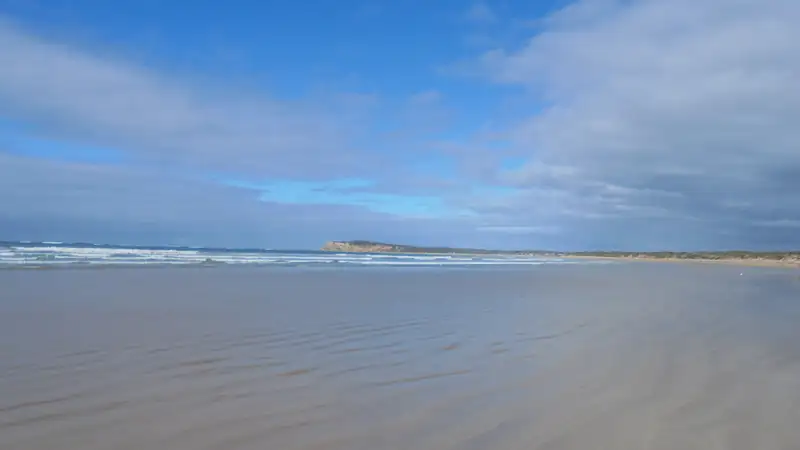
- Back Beach, on the ocean side, has the Point Lonsdale Surf Life Saving Club and is popular with experienced surfers in summer. It has strong permanent rips. Its rocky shoreline is good for rock pools at low tide.
- The promenade, 2.3 km along the bay, is a flat walk or run with views across the water.
- Cafes line the Esplanade; Early Nancy is the one the tourism board names.
- Lon Retreat & Spa, on 250 acres, has mineral water soaking tubs fed by natural springs.
Buckley’s Cave comes with a local story. According to the aussietowns directory, a cliff walk from the base of the lighthouse leads to a cave linked to William Buckley, the convict who absconded soon after reaching Port Phillip in April 1803 and lived with the Wadawurrung people for about 32 years before he gave himself up in July 1835. Take care on the cliffs and check the tide.
The town takes its name from Captain William Lonsdale, Port Phillip’s first police magistrate, and was named in 1837.
Getting there
| Way to go |
Time |
Details (Checked October 2026) |
| Car from Geelong |
About 30 min |
About 29 km; the lighthouse is at the end of Point Lonsdale Road |
| Bus 56 (McHarry’s) |
Check the timetable |
Geelong to Queenscliff via Ocean Grove and Point Lonsdale; myki |
| From Queenscliff |
A few minutes by car |
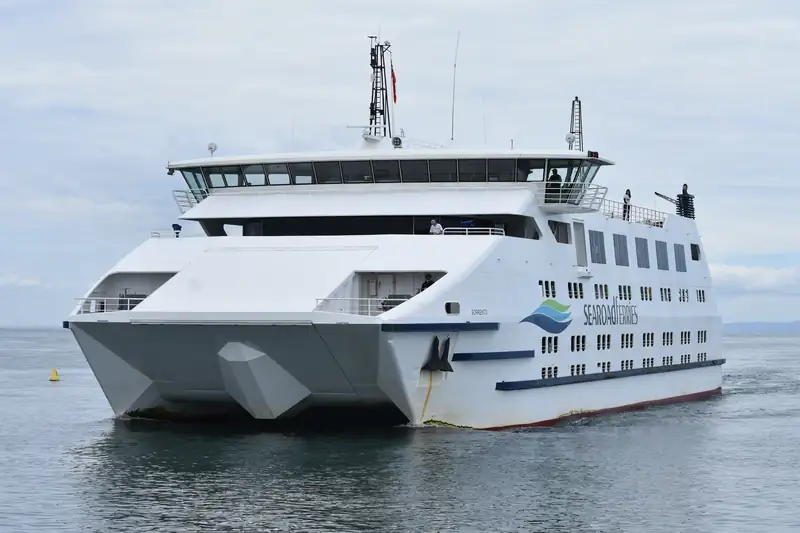
About 6 km straight line; the Sorrento ferry leaves from Queenscliff |
| Day tour |
10 hours |
From Melbourne, via the Geelong waterfront, with a Point Lonsdale stop |
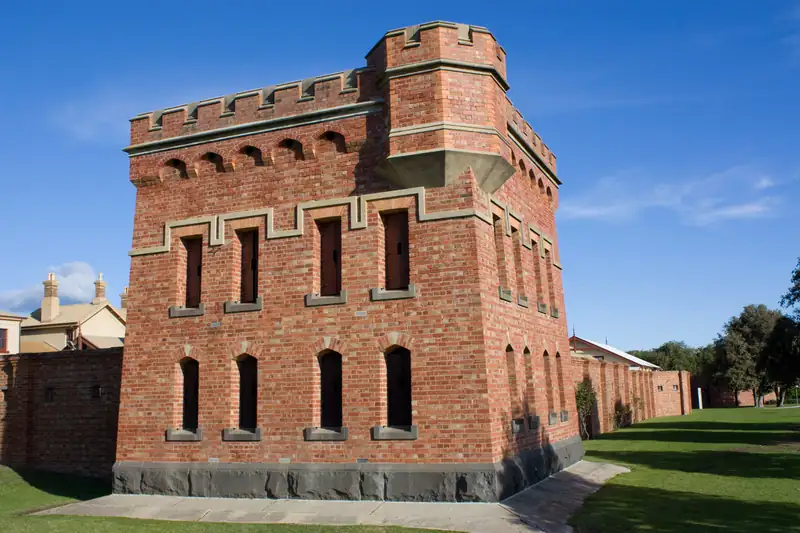
Point Lonsdale sits between Ocean Grove and Queenscliff, so it fits into a loop of the southern Bellarine. A good Sunday plan: book the first lighthouse tour, walk to Rip View Lookout, then drive to Queenscliff for lunch and the 1:45 pm Fort Queenscliff tour. Our Bellarine Peninsula guide maps out the rest, and the tours page lists bookable trips.