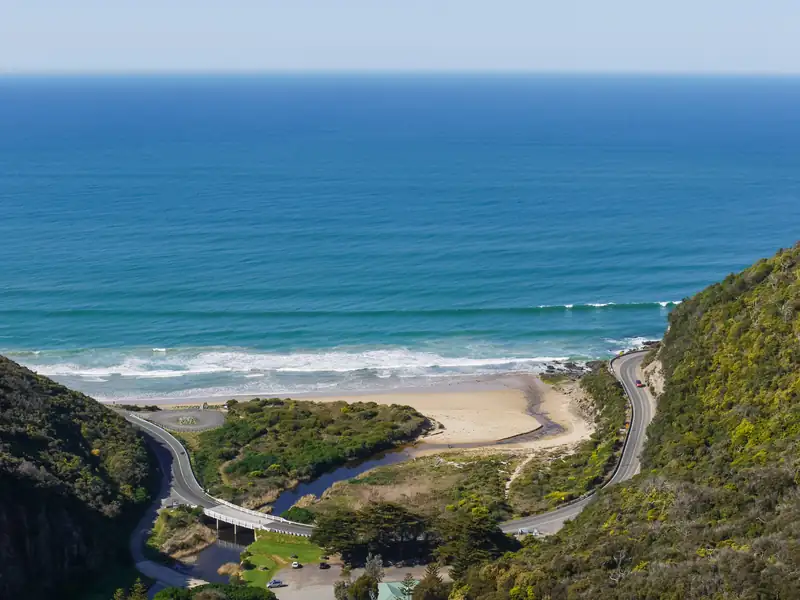
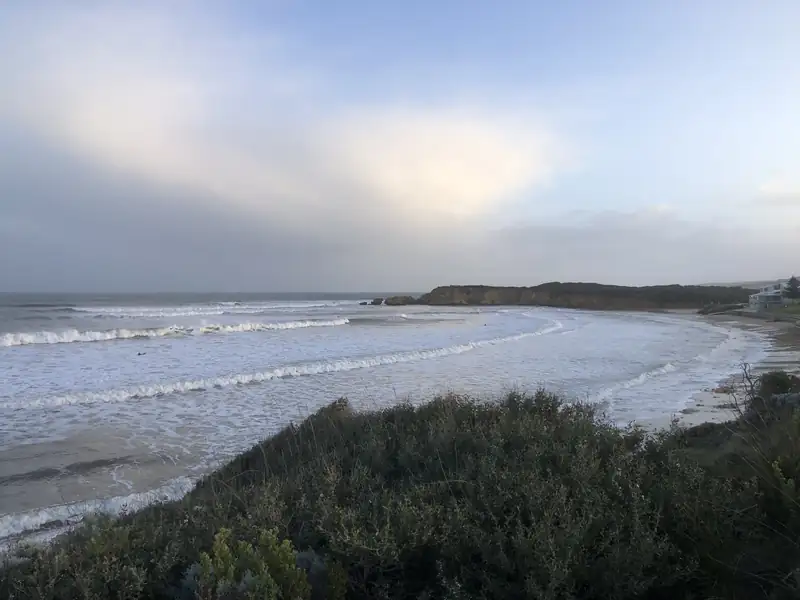
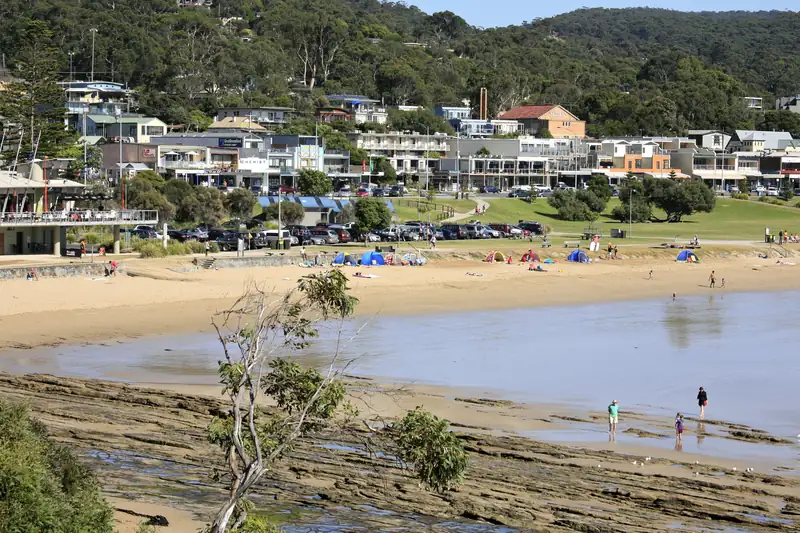
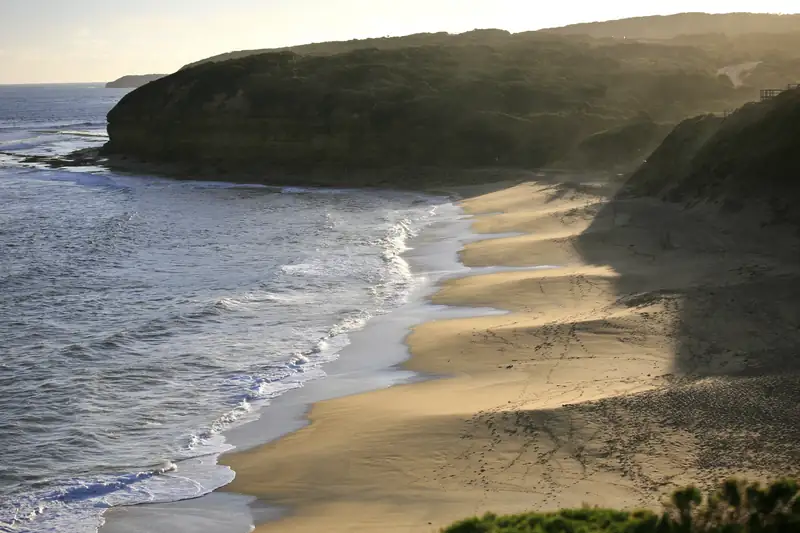
The Great Ocean Road starts in Torquay, 21 km south of Geelong, and runs about 240 km west to Allansford near Warrnambool. In order you pass Bells Beach (8 km), Anglesea, Split Point Lighthouse, the Memorial Arch, Lorne (47 km), Apollo Bay (92 km) and the Twelve Apostles (about 178 km from Torquay).
The Great Ocean Road starts in Torquay, 21 km south of Geelong, and runs west along the coast for about 240 km to Allansford, just east of Warrnambool. The map below is written as a table: every main town and sight in order, with its distance from the start in Torquay. For a plan of what to do at each stop, use the Great Ocean Road itinerary.
The Great Ocean Road map, town by town
Distances are by road from Torquay, measured on OpenStreetMap data with a route planner (October 2026). Times are free-flow driving times; add 10 to 20 percent for traffic, more on summer weekends.
| Km from Torquay |
Place |
Drive from Torquay |
Stop for |
| 0 |
Torquay |
- |
Start of the road; surfing museum, beaches |
| 8 |
Bells Beach |
11 min |
Clifftop viewing platforms, Rip Curl Pro at Easter |
| 18 |
Anglesea |
20 min |
Beach town on a river |
| 29 |
Aireys Inlet, Split Point Lighthouse |
33 min |
1891 lighthouse, Surf Coast Walk |
| 34 |
Memorial Arch, Eastern View |
38 min |
The road’s memorial arch |
| 47 |
Lorne |
53 min |
Pier, beach, Erskine Falls, Teddy’s Lookout |
| 92 |
Apollo Bay |
1 h 40 |
Lunch stop; end of the V/Line coach |
| 124 |
Cape Otway Lightstation |
2 h 10 |
1848 lighthouse, 12 km off the main road |
| 178 |
Twelve Apostles |
3 h |
Limestone stacks, Gibson Steps |
| 198 |
Port Campbell |
3 h 20 |
Overnight stop for the Apostles |
| 240 |
Allansford |
3 h 50 |
Western end of the road, near Warrnambool |
The Cape Otway figure includes the 12 km side road down to the lightstation. The rows after it assume you skip that detour and stay on the main road; the turn-off is about 21 km past Apollo Bay.
From Geelong, add 21 km and 25 minutes to every row. For Geelong’s own streets, waterfront and the Bellarine Peninsula, see our Geelong map.
Places just off the road
Some of the best stops sit a short way off the main road. Mark these too:
| Place |
Where |
Getting there |
| Point Danger rock pools |
Headland in central Torquay |
Walk from the Torquay beachfront; best at low tide |
| Bells Beach car park |
Bells Beach Road, west of Torquay |
Short side road; viewing platforms by the car park |
| Erskine Falls |
Great Otway National Park, inland from Lorne |
About 10 km by road from Lorne; 230 steps to the lower lookout |
| Teddy’s Lookout |
End of George Street, Lorne |
About 2 km from the centre; small car park |
| Cape Otway Lightstation |
Cape Otway, west of Apollo Bay |
12 km side road from the turn-off |
| Gibson Steps |
East of the Twelve Apostles lookouts |
1.1 km walk from the Twelve Apostles visitor facility |
Two of these need care. The Point Danger platform can catch you out on a rising tide, and the Erskine Falls steps are slippery after rain. The Cape Otway tower was closed for conservation works in October 2026, so you can walk the grounds but not climb.
Where does the Great Ocean Road start?
In Torquay. The eastern end of the road is at Torquay on the Surf Coast, and the western end is at Allansford, near Warrnambool.
You can drive it in either direction. From Geelong or Melbourne, starting at Torquay is the obvious choice, and it puts you on the ocean side of the road. Some Melbourne tours do it backwards: they head inland via Colac or Winchelsea to reach the Twelve Apostles early, then come back along the coast.
From Geelong: Torquay is about 21 km and 25 minutes south on the Surf Coast Highway, or 45 to 50 minutes on bus 53 from Geelong Station.
From Melbourne: about 75 km to Geelong first, then the same 21 km. Our Melbourne to Geelong guide covers the train.
How long is the Great Ocean Road?
About 240 km. The figure depends on who you ask:
| Source |
Length |
| Wikipedia |
240 km |
| Victorian Heritage Database |
242 km |
| Great Ocean Road archives |
243 km |
| Our route planner, Torquay to Allansford |
239.5 km |
Use “about 240 km” and you will not be far out.
Without stops, end to end takes about four hours. Nobody drives it like that, though. With photo stops, lunch and a walk or two, Torquay to the Twelve Apostles alone fills a day.
A short history
The road was built between 1919 and 1932 by more than 3,000 returned servicemen, as a memorial to those killed in the First World War. The first section opened in December 1922 and the whole road in November 1932. It was a toll road until 1936. Wikipedia describes it as the world’s largest war memorial.
The Memorial Arch at Eastern View, between Aireys Inlet and Lorne, marks that history. The arch you drive under today is a rebuild: the earlier one burnt in the Ash Wednesday bushfires of February 1983. Sources disagree on how many arches came before it, so we won’t put a number on it.
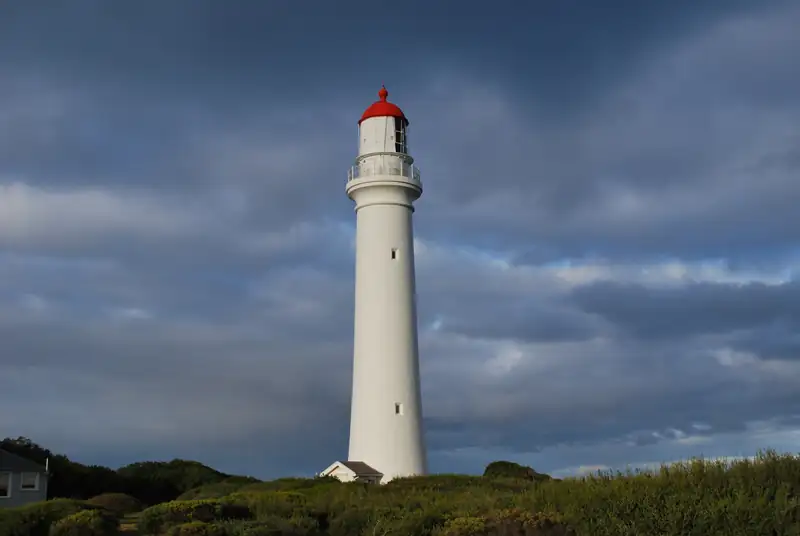
Split Point Lighthouse
Split Point Lighthouse stands on the headland at Aireys Inlet, about 29 km from Torquay and 47 km from Geelong. It was finished in 1891 (the point was first called Eagles Nest Point) and the tower is 34 m tall, according to Wikipedia. The light was automated in 1919. Its official site says it is famous for its role in the TV series Round the Twist.
Visiting (Checked October 2026):
| Detail |
What the official site says |
| Open |
Daily, weather permitting |
| Express Tour |
Self-guided, stay as long as you like |
| Guided Tour |
For groups; departs every 30 minutes |
| Prices and hours |
Not listed on the home page; check splitpointlighthouse.com.au |
The Surf Coast Walk passes the lighthouse on its way to Fairhaven, so you can also walk in from Aireys Inlet.
How to use this map
For a single day from Geelong, pick a turnaround point. Lorne (65 km from Geelong) makes an easy day. Apollo Bay (about 110 km from Geelong on the coast) is a full day there and back. The Twelve Apostles (about 200 km on the coast) is a very long day either way; coming back inland via Colac, about 150 km, saves close to an hour.
For more time, the Great Ocean Road itinerary splits the road over two or three days with overnight stops in Lorne and near Port Campbell.
Without a car, the V/Line coach from Geelong Station runs along the road as far as Apollo Bay. Beyond that, you need a tour. The big Great Ocean Road day tours start in Melbourne and drive past Geelong without stopping; our Great Ocean Road tours page compares them, and all tours covers shorter local trips.